- Location4.75
- Amenities4.75
- Services4.75
- Price4.75
- Rooms4.75
Presentation
Stages: Hanoi – Halong – Mai Chau – Pu Luong – Ninh Binh – Dong Hoi – Phong Nha – Hue – Saigon – Ben Tre – Vung Liem – Can Tho – Sadec – Mui Ne
Description: A complete tour of Vietnam for 21 days to discover the cultural and natural sites of the country from 1590€!
Day 1: Hanoi
Welcome by your French-speaking guide at the airport and transfer to the hotel.
Explore the streets of Hanoi in a sidecar (or in an old Russian jeep). We cross the shaded avenues of the French Quarter, then the legendary Long Bien Bridge, symbol of the resistance of the Vietnamese people during the American War.
In the evening, enjoy a Hanoian-style aperitif at a local Bia Hoi (own expense). This is a brasserie where locals go to hang out together between 5 p.m. and 7 p.m. This is an opportunity for you to immerse yourself in the crowd, because these places are mainly frequented by Hanoians.
Day 2: Hanoi
The morning is devoted to a walking tour in the Old Quarter of Hanoi. Discover the richness of the city through the different Vietnamese, Chinese, colonial and communist architecture. We thus discover architectural treasures such as the famous tube houses, sometimes more than 100 meters long. We enter in particular the street of Vietnamese medicine which will enchant you with its vibrations, and the infinite range of medicinal herbs and spices. Then, we take you to visit the Ethnography Museum. This museum is one of the most interesting and allows you to become aware of the ethnic diversity of this country. Then, visit the first university in Vietnam, the Temple of Literature. This place of contemplation dedicated to Confucius, made up of several buildings, offers a true oasis of tranquility. The aim of this visit is to help you understand the administration of Vietnam in feudal times: a system based on mandarin competitions. Many of its principles are still anchored in the mentality of Vietnamese people today.
Day 3: Hanoi / Halong
Not to be missed during your trip to Vietnam, discover the marvelous Halong Bay. A shuttle will pick you up from the hotel. Enjoy the landscapes of rice fields as far as the eye can see where agricultural work is still carried out by hand or with the help of water buffaloes.
Then, you board a traditional junk boat for a cruise on Halong Bay until noon the next day. The grandiose landscapes of Halong Bay and its biological richness make it one of the most beautiful natural sites in the world, as evidenced by its inclusion as a World Heritage Site by UNESCO in 1994.
You are welcomed by a welcome cocktail then a lunch and welcome speech from the captain. During this cruise in the bay you pass by the Cirque des Merveilles, the Con Cho and Dinh Huong islands.
At the end of the afternoon, you have the opportunity to attend a cooking class. Meals and night aboard the junk in a private cabin.
Day 4: Halong / Hanoi
At daybreak, don’t miss the milky colors that are very emblematic of this exceptional place. You have the opportunity to attend an initiation to Tai Chi. You visit Thien Canh Son Cave which features cauliflower-shaped limestone formations, as well as stalactites and stalagmites. To access the three rooms you will have to climb more than a hundred steps.
Return to Hanoi in the afternoon. If time permits, possibility of visiting a cultured pearl workshop. It is a recent industry, introduced into Halong Bay by the Japanese at the end of the 1990s. Manufacturing, in a closed cycle from oyster farming to the creation of jewelry, is entirely carried out by the Vietnamese.
Day 5: Hanoi / Mai Chau / Pu Luong
This morning, departure towards Mai Chau (160km, approximately 4 hours drive). The road to get there passes through some truly beautiful landscapes. Enjoy the landscapes and authentic scenes of life along this road dotted with rice fields and small villages. Around noon, we arrive at the Ban Nhot hamlet for lunch with locals. In the afternoon, we do a first hike (approximately 3 hours) inside the Pu Luong Reserve. You admire the rice fields. On the way, you can see many waterwheels, a traditional method of water collection and irrigation of several minority ethnic groups.
Dinner and night with the Thai ethnic group in the Ban Hang hamlet.
Day 6: Pu Luong
Breakfast at the locals’ home. Walk through the rice fields. Hike on the old Ho Chi Minh Trail towards the village of Pa Kha. Unlike the Sapa region, here you will not have the feeling that tourism is taking the place of agriculture. All the farmers work their land to cultivate, among other things, rice, bananas, corn, sugar cane and even cabbages.
NOTE: In the Pu Luong Reserve, there is only one rice growing season per year. Rice transplanting takes place in April-May. The rice fields take on a dark green color in June-July-August. In September, the rice fields start to turn golden everywhere. Between the end of September and October, it is the rice harvest.
With the development of sustainable tourism, the life of the Pu Luong Reserve continues its course. Lunch with the locals. Continue uphill on a small track of limestone rocks to the village of Kho Muong. Free time to rest or discover the village.
Dinner and night with locals in Kho Muong in a Thai house.
Day 7: Pu Luong / Ninh Binh
Walk through the magnificent valley, passing through small typical villages surrounded by rice terraces, each one as beautiful as the next. After 3 to 4 hours of walking in these sumptuous landscapes, arrival at the village of Pho Doan. In the afternoon, transfer to the Ninh Binh region (140km, approximately 3 hours drive). In this province, the Red River extends its last arms before the sea, in a surprising landscape of cliffs, limestone peaks and karst caves. This is why we like to give it the nickname “land Halong Bay”.
Day 8: Ninh Binh / Dong Hoi
We first visit the Jade Cave Pagoda where there are three pagodas and a monastery built in the 17th century. The first pagoda leans against the mountain in the middle of a lush garden; we access the second by a small staircase then, even higher, we visit the third which contains three Buddhas. Then it’s the Hang Mua Pagoda. To get there, you have to walk 450 steps and at the top of the hill you will have a breathtaking view of the entire area.
In the afternoon, boat trip to Tam Coc. You will enjoy a two-hour visit through immense and countless karst peaks rising from the earth and framing a wild and green nature, hence its nickname “Terrestrial Halong Bay”. You should also know that Tam Coc means the “three caves”. You will understand this meaning better during your walk.
In the evening, transfer to Ninh Binh station for the sleeper train to Dong Hoi.
Day 9: Dong Hoi / Phong Nha
You arrive early in the morning at Dong Hoi station where your driver is waiting to show you the Phong Nha reserve, classified by UNESCO. A true testimony to the history of the Earth, this national park is home to rich biodiversity as well as a network of around 300 spectacular caverns and grottoes with elegant stalagmites, crossed by the longest underground river in the world. We arrive at the entrance to Phong Nha cave. Once inside, we only hear the sound of resonating water. You will be surprised by the shape of the stalactites and stalagmites that surround you. Then, transfer by car to Thien Duong Cave, nicknamed Paradise Cave. This is one of the largest accessible and most impressive caves in the region. Enter the cave after a climb of 400 steps then walk for a few km through magnificent stalactites and stalagmites. Picnic lunch in thatched arbors.
Day 10: Dong Hoi / Phong Nha
This morning you leave for a day of hiking in the heart of the national park on the western trail of the Ho Chi Minh Trail to discover the fauna and flora of this UNESCO-listed park. Every square meter is occupied by dense, wild vegetation. You evolve in the middle of the characteristic jungle of the park, hiking from hills to villages of the Raï community. You access the primary forest of Dau Raï and its century-old trees. Picnic lunch in this untouched natural setting and return to the accommodation at the end of the afternoon
Day 11: Phong Nha / Dong Hoi / Hue
You then take the road to Huê, the last capital of the Nguyen emperors. It was also the scene of one of the most significant episodes of the Vietnam War: the Tet Offensive. Continuation of the road towards the famous DMZ of the American war in Vietnam. We cross the 17th parallel which served as the Demilitarized Zone during the American war. For the Vietnamese, this region is the equivalent of the landing beaches in Normandy. Several stops are planned to fully understand the strategic issue of the DMZ which was the official border between communist North Vietnam and the pro-American South. First, stop at the Vinh Moc tunnels, allowing you to learn more about the living conditions of Vietnamese living north of the DMZ. Fiercely bombed for 6 years by the American army, the surrounding villagers created a complex network of tunnels directly underground. We cross the Hien Luong Bridge, which spans the Ben Hai River and which marks the boundary between North and South Vietnam. Continue to the Truong Son cemetery which occupies a vast green space. The approximately 15,000 tombs that make it up are organized in perfect alignment around the commemorative monuments of the regions from which soldiers who died in combat came. Arrival in Hue late in the afternoon.
Day 12: Hue
The cruise along the Perfume River is considered an essential stop during a visit to Hue. A boat trip is an opportunity, once again, to realize that the Vietnamese are a people of the water. We begin our navigation towards the Thien Mu Pagoda – symbol of the city of Hue. You set off to discover the Imperial Citadel of Hue. The city brings together most of the historical sites of Vietnam, they are testimonies of the power and influence of the Nguyen lords.
Visit the Tu Duc mausoleum, this ensemble includes around 50 monuments and a large pool set in a landscape of thick vegetation.
Introduction to the art of kite flying from a craftsman in Hue. By combining passion and know-how, different generations of craftsmen from the ancient capital have created a gigantic collection of traditional kites with thousands of models in the shape of birds and animals: dragon, lion, unicorn, phoenix , peacock, butterfly, crow… but also dry and goldfish. For one hour, you will make your own kite.
Day 13: Hue / Danang / Hoi An
In the morning, you take the road towards the south taking the famous cloud pass road (Hai Van). This part is the most picturesque of the entire Mandarin Road. It then runs along the Truong Son mountain range which marks the border with Laos. At its summit, it offers a unique panorama of Danang Bay to the south and the coast of Hue to the north. Several stops are planned en route, including one at Lang Cô beach, the village of which occupies a narrow peninsula wedged between the sea and the lagoon. Danang, the former Tourane, became a French concession in 1888. Today it is a port city of more than a million inhabitants. In Da Nang, you visit the Cham Museum. It brings together the most beautiful collection of Champa art visible in Asia, with more than 300 original pieces dating from the 7th to the 15th century. Cham art is very close to Khmer art and has also been influenced by Javanese and Dai Viet arts.
Day 14: Hoi An
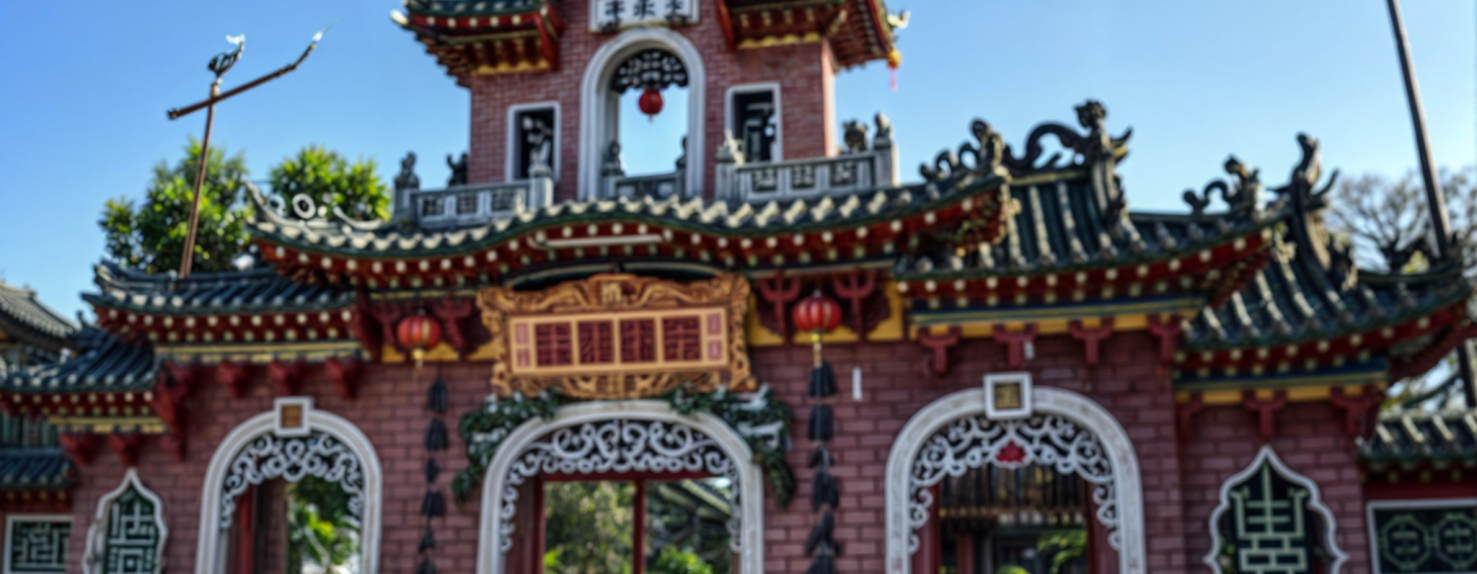
Morning, stroll through the UNESCO-listed old town. Take the time to stroll through the streets to admire the architecture and immerse yourself in the atmosphere of this old city of Faifo which is today a real living museum where 844 sites of historical interest have been identified, such as bridges, wells , pagodas and private houses. We will note, during the visit to Hoi An, the perfect state of conservation of a good number of houses, the most famous of which is the Tan Ky House. We will have the opportunity to discover the communal house of the congregation of Phuc Kien, founded in 1786, part of the temple is dedicated to Thien Hau, goddess of fishermen. Finally, we will see the Japanese bridge: located to the south of the city, this covered bridge built in 1593 connects two districts of the city.
We then suggest a stop at Reaching Out. The particularity of the establishment lies around the staff. All employees are deaf and mute and travelers will live an unusual experience based on the absence of sound.
In the evening, you can enjoy the Full Moon Festival in Hoi An. This festival is organized on the 14th day of each month, according to the lunar calendar. During the full moon festival, all the lights in the old town are turned off which gives a magical feel and only the lanterns illuminate Hoi An.
Day 15: Hoi An / Saigon
Morning flight to Saigon. Renamed Ho Chi Minh City in 1976, Saigon is the largest city in the country and established itself very early as the economic capital. The French presence is still very marked by long shaded avenues, dotted with colonial houses, gardens and monuments. A walk will take us to the Notre-Dame cathedral in neo-Roman style with two spiers 40 meters high and the central post office built in the style of the Gare d’Orsay and whose cast iron glass roof was manufactured by the workshops of Gustave Eiffel. Then, visit the Jade Emperor Pagoda, built in 1909 by the Canton congregation, it is considered the most important in the city.
In the afternoon, visit the Reunification Palace, also known as the Independence Palace. You can see reception rooms, the office of the former president as well as the fortified command center in the basement. Departure for the Museum of Traditional Vietnamese Medicine, retracing the history of medicinal plants through the ages.
Day 16: Saigon / Ben Tre / Vung Liem
Departure with the guide towards Ben Tre to begin your discovery of the Mekong Delta. Upon arrival in Ben Tre, you board a local boat. This takes you on the river, to discover the daily activities of its inhabitants. You can witness, among other things, the manufacturing of bricks and coconut fibers. Continue to the Cai Son and Nhon Thanh circuses where local families specialize in making mats. Then, continue the road to Vung Liem. After crossing the Quelle Thien ferry, take a bike ride or walk to the locals’ house. Free time then preparation of dinner with the host family. Night at a local’s place.
Day 17: Vung Liem / Can Tho
Breakfast at the locals’ home. In the morning, departure to discover authentic life on the island of Quelle Thien. It is located at the meeting point of the provinces of Ben Tre, Vinh Long and Tra Vinh, it is a hidden place, untouched by all tourists covered with immense orchards and small canals on the edge of the mangrove. You will go on foot or by bike with the owner to greet his neighbors, cousins, family… You will thus discover the homes and the habits and customs of an island where time seems to have stopped. Return home and have lunch with the locals.
In the afternoon, transfer to Can Tho.
Day 18: Can Tho / Sadec / Saigon We leave this morning by boat to sail among the very busy Cai Rang floating market. This walk takes us to the heart of the commercial and typical life of the delta, and it is also an opportunity to taste the exotic fruits of the region. Return to the hotel for breakfast.
Transfer to Sadec, mainly known for having hosted the novelist Marguerite Duras and her family between 1928 and 1932. It is also in Sa Dec that Huynh Thuy Le, the “Chinese” who the narrator meets one day on the ferry taking her home, lived at her boarding school in Saigon and who would become her lover. You will visit the house of the rich family of Huynh Thuy Le, after having housed administrative offices, has been open to the public since 2009. The facade of the house is decorated with motifs representing the four seasons.
In the afternoon, visit the village of Tan Quy Dong. 100 years old, the village has flowered and fragrant pergolas. The village is full of marigolds, chrysanthemums of all kinds and roses. There are also exotic flowers such as lisianthus and Salvia splendens.
Day 19: Saigon / Mui Ne Bus transfer to the seaside resort of Phan Thiet. It is a particularly pleasant seaside resort all year round because it enjoys a micro climate. Declared an official ecological development zone, its dune landscapes and canyons are superb. It has long been a fishing village and still today fishing is the main activity of this province. Village life is organized around this activity and often on the beach, you can watch the fishermen return and admire their catch.
Day 20: Mui Ne
Free time in Mui Ne.
Day 21: Mui Ne / Saigon
Free morning. In the afternoon, transfer by bus to the airport for your return flight.
| The price includes | Are not included |
|---|---|
|
|